Philadelphia Eagles
4.73.44KReviews
Analysis ByAppCompare
I installed Philadelphia Eagles expecting a straightforward team app, and that is exactly where its value lies. This is the official mobile app of the Philadelphia Eagles, developed by PhiladelphiaEagles, and it fits naturally into the routine of a supporter who wants team information close at hand rather than scattered across social networks, sports sites, and browser tabs. I found it most useful as a shared reference point: one person can check the latest team material, another can follow along during a game, and everyone can return to the same team-focused destination without mixing it up with general sports coverage.
That focus also makes the app easier to judge honestly. It is not trying to replace every sports service on a phone, and I would not choose it as my only source for the entire league. Its strength is being centered on Philadelphia Eagles supporters. If that is your team, the focused experience feels more relevant than a broad sports app filled with scores and headlines from clubs you never follow. If you mainly want neutral league coverage, fantasy tools, or a single dashboard for several teams, a general sports alternative may suit you better.
How the app fits into a shared household
The clearest everyday use case is a household where Eagles interest is shared but not identical. I can imagine checking the app in the morning, then leaving the phone available for someone else to catch up later. One person may care about team news, while another only opens the app around game time. Because the app is dedicated to one club, there is less searching and less chance of opening an unrelated team page by mistake. That sounds minor, but it matters when several people are using one device quickly.
A shared phone or tablet also changes how I think about convenience. The app is free, so installing it does not require a purchase decision before the family can try it. It carries an Everyone content rating, which makes it a comfortable fit for a household with younger users in the room, although an age label should not be treated as a substitute for a parent deciding what a child may view or do on a device. I would still keep ordinary household rules about notifications, screen time, and purchases.
For a game-day routine, I would use it as the team-specific layer beside whatever television, radio, or general score service the household already prefers. Someone watching the broadcast can use the app for a closer connection with the Eagles, while another person can check it briefly without asking which website is open. This division is practical: the app supplies team context, while the broadcast remains the better choice for seeing the action itself.
There is also a useful social benefit to keeping the team source in one place. In a family chat, people often forward screenshots or repeat partial information from different outlets. I found that a dedicated team app can reduce that confusion because everyone begins from the same club-centered source. It does not eliminate disagreements about the team, of course, but it can make the basic act of catching up less fragmented.
What I would do before handing it to someone else
I would first open it alone and decide which parts are genuinely useful for our household. That small trial matters because a shared device should not become a noisy stream of alerts that nobody wants. I would review the app’s notification behavior on the device, then agree with other users about whether alerts should be kept on, limited, or turned off. The right choice depends on the household: a committed fan may appreciate frequent reminders, while someone sharing the phone for work may find them distracting.
I would also make sure each person understands that the app is a team destination, not a complete sports encyclopedia. That expectation prevents disappointment. A child looking for Eagles material may enjoy the focus, while an adult wanting standings across many competitions may quickly need another app. Explaining that boundary before use is more helpful than presenting it as an all-purpose sports tool.
The app has been available since September 7, 2011, and its current version is 3.9.6. Those details suggest a long-running team app rather than a short-lived experiment, but I still judge it by how well it fits today’s habits. On a modern device, I would keep the operating system requirement in mind: it needs OS 10 or later. That is an important setup check for an older phone or a device that has not been updated recently.
Account boundaries and purchase awareness
Shared use becomes more complicated when more than one person handles the same device. I would avoid assuming that every user should have access to the same account or personalized area. Instead, I would decide whether the app is being used as a common team window or as an individual fan tool. A common window is simpler, but it can blur preferences and notifications. Separate personal use gives clearer boundaries, provided each person manages their own device and account choices responsibly.
Although the app is free to download and use, it includes in-app purchases priced at $1.99 per item. That is the one detail I would explain clearly before letting a child or guest explore it. Free installation does not automatically mean every action inside the app is free. On a shared device, I would check the household’s normal purchase protections and make sure younger users know not to approve a purchase without permission.
This is not a criticism unique to the Eagles app; it is simply part of sensible shared-device management. The useful distinction is between access to the free app and authority to spend money through it. Adults may be comfortable with that arrangement, while a family device used by children needs a more deliberate rule. I would not hand over the phone and assume the Everyone rating answers the purchasing question.
I would also avoid leaving a personal session open if the device regularly moves between household members. Even when the content is harmless, personal preferences and account activity are better kept separate when possible. My practical approach would be to use a family tablet as a general team display and reserve individual phones for personal settings. That gives the household the convenience of shared access without making every preference communal.
Coordination on game days and between devices
The app works best when it supports coordination rather than trying to become the household’s entire sports system. Before a game, I would use it as the Eagles-specific place to prepare, then decide who needs alerts and who does not. During the game, one person might keep it open for updates while another watches the broadcast. Afterward, it becomes a quick way to return to the team instead of searching through a crowded sports homepage.
That workflow has a useful trade-off. A general sports app is usually better when I need several teams, multiple leagues, broader scores, or a single cross-sport view. The Eagles app is better when my attention is already fixed on Philadelphia and I want less irrelevant material. I would choose between them based on the task, not loyalty to one format. In my experience, keeping both types available can be more efficient than forcing one app to do everything.
For households with more than one device, I would assign roles rather than duplicate every action. A phone can remain personal and mobile, while a tablet can sit in a common room as the shared team screen. That arrangement reduces the temptation to pass one device around during a busy moment. It also gives each person a clear expectation: the shared device is for team information, and the personal phone is for individual preferences.
One non-obvious advantage of this approach is that it helps prevent notification fatigue. If every family member enables every alert on every device, the team app can become background noise. I would choose one primary device for timely notifications and use the others for manual check-ins. This is a simple coordination rule, but it preserves the value of alerts for the person who actually wants them.
Another practical tip is to check the app before leaving for an event rather than relying on a last-second setup. Confirm that the device meets the OS 10 minimum, that the battery is adequate, and that the household knows which person is carrying the primary device. None of this changes the app itself, but it makes the team app more dependable in real use. A shared plan is often more valuable than installing several overlapping sports apps.
Where it differs from broader sports alternatives
Compared with a general sports app, the Eagles experience is intentionally narrower. That narrowness is a benefit when I want team identity and a cleaner path to Philadelphia-focused material. It is a limitation when I want neutral reporting, league-wide comparisons, fantasy analysis, or a single place for every club I follow. A broad service may also be more convenient for someone who checks many sports in the same session.
Compared with social media, the dedicated app gives me a more controlled starting point for team-related information. Social platforms can be faster for conversation, but they also mix opinions, unrelated posts, and algorithmic distractions. I prefer the app when I want to check the team without entering a large public feed. I would still use social media for conversation with friends, because a team app is not a replacement for the community aspect of those services.
Compared with a sports news website in a browser, the app feels more suitable for repeated use on a phone. The trade-off is that a browser may be easier for occasional visitors or for someone who does not want another installed app. If I only follow the Eagles once in a while, a web search could be enough. If I return throughout the season, the dedicated installation makes more sense.
I would skip it if my main requirement is a complete league command center. I would also skip it if I support several teams equally and dislike switching between club-specific apps. On the other hand, I would recommend trying it to an Eagles supporter who is tired of filtering general sports coverage. Its purpose is clearest when the team itself is the reason I am opening the phone.
Age, trust, and responsible use
The Everyone rating makes the app approachable for a broad household audience, and I appreciate that a younger fan can explore a team-focused app without the label suggesting mature content. Still, trust should be active rather than automatic. Parents should decide whether notifications are suitable, whether the child may use the device independently, and whether purchases are allowed. The rating helps with the age context, but it does not replace those household decisions.
I would explain to a younger user that official does not mean every item deserves to be shared or acted on immediately. A child can enjoy team material while still learning not to approve purchases, change device settings, or hand over account details. That lesson is especially important on a shared tablet, where several people may be signed in to different services. The app can be part of a healthy sports routine without becoming an excuse to remove ordinary boundaries.
For older relatives or less confident phone users, the focused design is potentially easier to understand than a crowded multi-sport application. I would show them the basic path they need and avoid turning the first session into a tutorial about every possible option. The best shared experience is often the simplest one: open the team app, find the current material, and close it when finished.
Trust also includes knowing when not to rely on one source. I would encourage household members to compare important details with the broadcast or another established sports source if a decision depends on exact timing or wider league context. That is not because the app lacks value; it is because no team-specific app should be treated as the only tool for every sports question.
What the ratings and pricing suggest
The app holds a 4.7 average from around fourteen thousand ratings, with roughly three thousand four hundred written reviews. That is a strong public response and matches my impression that the app serves its intended audience well. It has also passed five hundred thousand installs, which gives it a substantial audience without changing the more important question: whether its team-first focus matches the way I follow sports.
The free price makes experimentation easy. I can install it, test it during a normal week, and decide whether it earns a permanent place on the device without paying at the door. The in-app purchase price of $1.99 per item is modest in isolation, but shared-device users should still treat it as real spending. I would judge the free experience first and discuss any optional purchase before approving it.
Ratings are useful as a confidence signal, not as a guarantee that every household will love the same workflow. A dedicated fan may find the focus exactly right, while a casual viewer may see little reason to install it. The strong average tells me that many users appreciate what it is designed to do; it does not turn the app into a replacement for a multi-team sports service.
My household verdict
After using it, I see Philadelphia Eagles as a practical team companion rather than a universal sports hub. I would recommend it to a household where at least one person follows the Eagles closely and wants a consistent, official team destination on a phone or tablet. The free entry point, Everyone rating, and focused subject make it easy to introduce, while the long-running presence and current version give it the feel of an established app.
My main advice is to set boundaries before sharing it. Choose a primary notification device, keep personal account choices separate where possible, and explain that free installation can still include $1.99 purchases per item. Check the OS 10 requirement before installing on older hardware. Those small preparations address the real friction points more effectively than simply telling everyone to download it.
I would choose a broad sports app alongside it when the household follows several teams or needs league-wide coverage. I would choose a browser when the Eagles are only an occasional interest. But for a family or group of friends that repeatedly returns to Philadelphia Eagles news and wants less clutter than a general sports feed, this app earns its place. My final view is positive: it is focused, accessible, and most useful when everyone understands exactly what role it plays.
FAQ
What is the Philadelphia Eagles app used for?
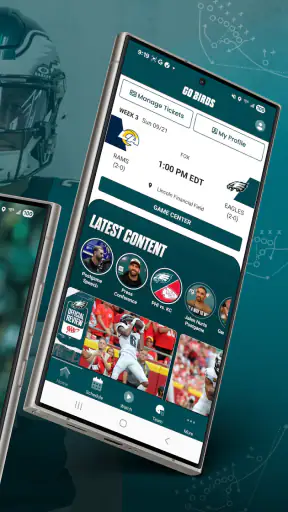
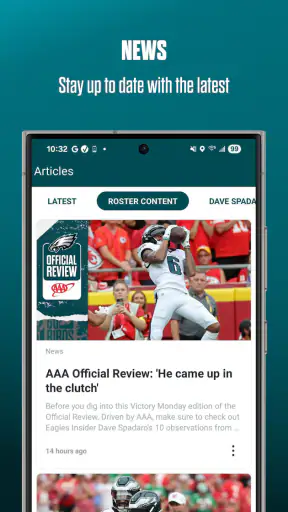
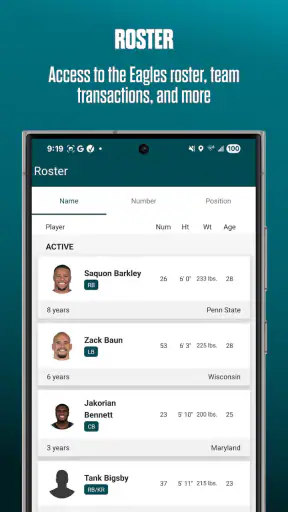
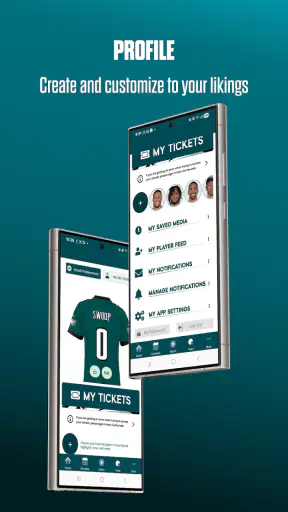
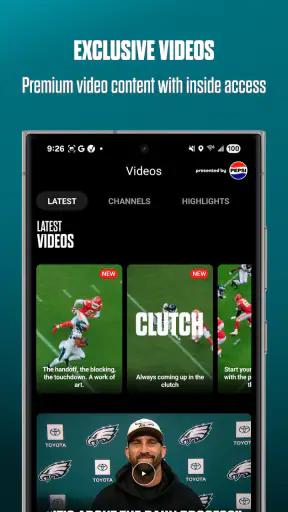
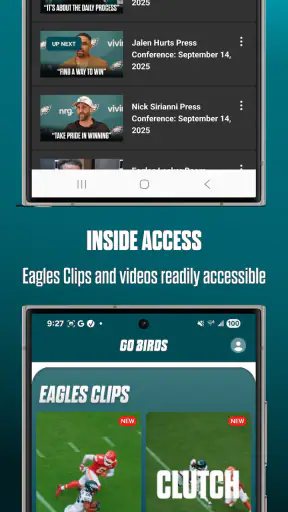
The Philadelphia Eagles app is designed for fans who want convenient access to team news, game information, schedules, scores, rosters, videos, and other official content. During the season, it can also provide updates about upcoming matchups, live game details, ticket information, and team announcements. It is a useful companion for following the Eagles from anywhere, although the exact features may vary by region and app version.
Can I watch Philadelphia Eagles games through the app?
The app may offer live updates, play-by-play information, highlights, interviews, and selected video content, but it does not necessarily provide live streaming of every Eagles game. Live game availability usually depends on broadcasting rights, your location, and the streaming services connected to your account. Before downloading, check the current description and regional restrictions so you do not mistake the app for a complete replacement for a television or sports streaming subscription.
Does the Philadelphia Eagles app provide ticketing and stadium information?
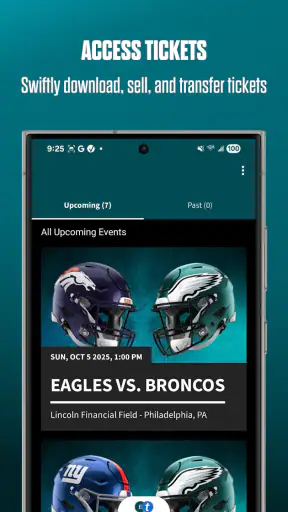
Yes, official Eagles mobile services commonly include information related to tickets, Lincoln Financial Field, stadium policies, parking, transportation, and event-day guidance. Depending on the current version, users may also be able to access or manage digital tickets through connected ticketing services. Fans attending a game should review the latest instructions inside the app because entry rules, bag policies, parking details, and available features can change before an event.
Is the Philadelphia Eagles app free to download and use?
The Philadelphia Eagles app is generally free to download, and many of its core features, such as news, schedules, scores, and team information, can be used without paying. However, certain content or services may require an external subscription, a ticket purchase, a league account, or access through a participating streaming provider. Mobile data charges may also apply when watching videos or using live updates away from Wi-Fi.
What devices and permissions are required to use the app?
The app is intended for compatible Android and iOS smartphones and tablets, but the required operating system version can change as new updates are released. It may request permissions for notifications, location-based information, storage, or account access to support features such as alerts, stadium guidance, and personalized content. You can usually manage these permissions in your device settings, though disabling some of them may limit the app’s functionality.
Pros
- Official team news
- scores
- and updates in one place.
- Useful schedule access for tracking upcoming Eagles games.
- Team-focused content keeps Philadelphia fans informed.
- Fast access to game-day information and team announcements.
- A convenient companion for following the Eagles throughout the season.
Cons
- Some content may be limited or less useful during the offseason.
- Frequent notifications can become overwhelming for some users.
- Video and media features may require a stable internet connection.
- The experience is mainly designed for dedicated Eagles supporters.
- Certain features or content may vary by region and device.